

Straw particles
Release time:
2024-05-17
Straw
Straw is a mature crop stem leaf (spike) part of the general term. Usually refers to wheat, rice, corn, tubers, rape, cotton, sugar cane and other crops (usually coarse grains) after the harvest of seeds. More than half of the products of crop photosynthesis exist in straw. Straw is rich in nitrogen, phosphorus, potassium, calcium, magnesium and organic matter. It is a kind of multi-purpose renewable biological resources, and straw is also a kind of roughage. It is characterized by high crude fiber content (30%-40%) and lignin. Although lignocellulose can not be used by pigs and chickens, it can be absorbed and utilized by ruminants, cattle, sheep and other livestock.
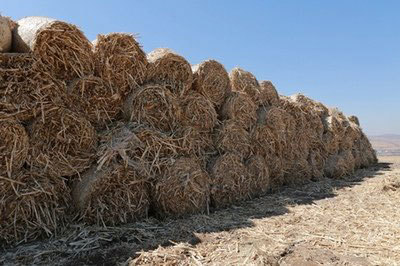
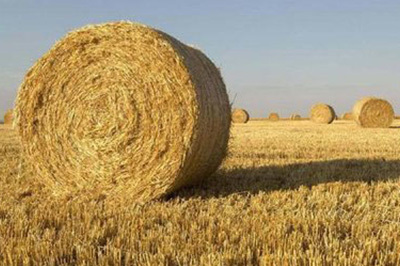
Application of straw in the world
In the United States, there are 24 agricultural states that can collect about 45 million tons of straw every year, which can be used as feed or used to build houses and fill the walls of new houses after squeezing the whole bundle of straw with high intensity. In addition, the United States is also actively promoting renewable energy and using straw as an emerging alternative fuel, especially biofuel.
In Europe, it has created a new way of straw power generation.
In Japan, people mainly turn the straw into the soil layer and return it to the field as fertilizer, and also use the straw as roughage to feed livestock.
In 2017, the total theoretical resources of straw in China reached 1.02 billion tons, an increase of nearly 0.4 billion tons compared with the early 1990 s. Among them, the amount of corn, rice and wheat straw was 4.3, 2.4 and 0.18 billion tons respectively, and the proportion of straw of the three major crops reached 83.3 percent. The collectable resources of straw in China are 0.84 billion tons, and the utilized amount reaches about 0.7 billion tons. The comprehensive utilization rate of straw (the ratio of utilized amount to collectable amount) exceeds 83%, among which the utilization rates of straw fertilizer, feed, fuel, base material and raw material are 47.3, 19.4, 12.7, 1.9 and 2.3 respectively, has formed a fertilizer, feed and other agricultural-based comprehensive utilization pattern.
Main characteristics of straw
Generally speaking, the straw is composed of 80-90% cells and 10-20% lumen, and the internal substance is composed of 5-10% silica and 5-15% extract, most of which are water-soluble. Molecularly, the straw cell wall is like a woody cell wall, consisting of cellulose, hemicellulose and lignin. Cellulose aggregates in fibrils surrounded by molecules. Lignin is the "glue" that connects individual cells to form plant tissue and fibrils to form cell walls ". Straw differs from wood in the content of cellulose, hemicellulose and lignin. The cellulose and lignin contents of straw were lower, but the hemicellulose content was higher.
Due to the wood-like composition of straw, straw can be used to make straw pulp or converted into straw particles. According to the particularity of straw, straw granulation process can be summarized as follows:
1. Raw material preparation stage:
Straw generally has a high dusting potential, which is influenced by the harvesting method. Therefore, the straw needs to be screened from contaminants, such as dust and other foreign materials that may affect the quality of the straw particles, such as stones, metals, and those that may damage the granulator in the following procedures.
2. Crushing stage:
Straw biomass is a tubular material with a diameter of 4-8mm and a wall thickness of about 0.3-0.6mm. With the tubular/tubular structure, the straw can be easily processed and obtain the desired particle size. Generally, the grinding of the straw includes cutting and crushing of the straw. 3. Drying stage: Usually, the straw is transported in the form of air-dried bags with a moisture content of about 15%, which is suitable for the production of straw particles. Therefore, the drying process of the straw particles may be omitted. But if the straw moisture is large, the drying step is necessary.
4, modulation: straw needs special conditioning to achieve the desired hardness. Straw conditioning includes the application of steam (and/or water) and the addition of binders or additives. Conditioning is required to reach the necessary temperature and humidity to obtain ductility and to melt the lignin to act as a binder. A binder is needed to enhance the hardness of the granules and reduce abrasion during granulation.
5. Granulation: In the granulation process, it is necessary to consider the influence of material moisture, density, particle size, fiber strength, natural binder and other factors on the quality of granulation.
The common problems in the process of straw pellet granulation are blockage and breakage of the pellet mold, overheating, high energy cost or poor pellet quality, and high maintenance rate of the granulator. In order to avoid the above problems, a high quality granulator is required.
6. Cooling and screening: The newly extruded straw particles are hot and soft and need to be cooled to obtain the ideal hardness. At the same time, the particles with substandard molding effect are screened out by the screen on the cooling machine.
7. Finished product packaging: The cooled particles need to be fed into the finished product particle bin through a professional skirt belt conveyor, and then unloaded from the finished product particle bin and packaged with a packaging scale.
Application range of straw particles
Straw particles are widely used in daily life. In general, straw pellets can be used as animal bedding, animal feed, and heating fuel for domestic and industrial use.
Now straw pellet technology is widely used, and straw pellet machines are sold worldwide, which makes straw pellets very popular in heat and power production.
Production process of straw particles
Straw curing molding technology is the use of straw straw, wheat straw, corn straw and other agricultural waste as raw materials, through special equipment straw granulator after crushing treatment, compression treatment and other processes, pressed into a direct combustion of solid biomass fuel.
1. Cut or crush the straw to be pressed, and control its length to be less than 30mm.
2, the crushed straw through the conveyor into the drum dryer moisture content control in the range of 10 ~ 15%.
3. The dried raw materials are piled up and stored after unloading Shakron, or stored in a silo. Silo
4. The material is fed into the feed port of the biomass granulator through the feeding conveyor. The machine rotates through the main shaft to drive the roller to rotate, and after the rotation of the roller, the material is forced to extrude from the die hole into a block and fall from the discharge port.
5. It is then fed into the particle cooler by a dedicated conveyor.
6. After the particles are cooled, the particles are sent to the packaging scale or the ton charter machine for bagging and packaging.
After solidification, the biomass pellet fuel has a large proportion, small size, easy storage and transportation, and is a high-quality solid fuel with a calorific value of 3200-4500 kcal. It has the characteristics of flammability, less ash, and low cost. It can replace firewood, Raw coal and other fuels are widely used in heating, domestic stoves, industrial boilers, biomass power plants, etc.
As a new commodity energy, straw pellet fuel has been widely used in various industries. And because of its high density, high calorific value, shape rules, good liquidity, it is very convenient to realize automatic control of combustion, can save large energy costs for enterprises.
Precautions for Particle Processing
1. Before operating the machine, the operator should carefully read the instruction manual and be familiar with the various technological processes of the equipment.
2, the production process, to strictly in accordance with the procedures and sequence of operation, and according to its requirements for installation and operation.
3. The host equipment needs to be installed and fixed on the horizontal concrete floor to reinforce the tightening screws.
4. Smoking and open fire are strictly prohibited in the production site.
5. After each startup, you need to idle for a few minutes before feeding.
6. It is strictly prohibited to add hard debris such as stone and metal to the feeding device. Iron removal shall be done before granulation to avoid damage to the granulation room.
7. During the operation of the equipment, it is strictly forbidden to use hands or other tools to transfer materials to avoid danger.
8. If there is any abnormal noise in the production process, the power supply should be cut off immediately, and the abnormal situation can be checked and handled before starting the machine to continue production.
9. Before stopping the machine, stop the auxiliary feeding first, then put in the oil, and stop the machine only after the die hole is full of oil and there is no oil in the granulation chamber. The purpose of adding oil is to make it easier to discharge the next production.
Operate the granulator correctly according to the requirements and pay attention to related matters according to the requirements, which can not only improve the output and operating performance of the equipment, but also extend the service life of the equipment.
Related Content

CONTACT US
Address: No. 3-1, Sangyuan Road, Sangyuan Industrial Park, Xianggongzhuang Street, Zhangqiu District, Jinan City, Shandong Province